
-
Certified Company
ISO 9001:2015 -
30+ Years
of Filtration Excellence
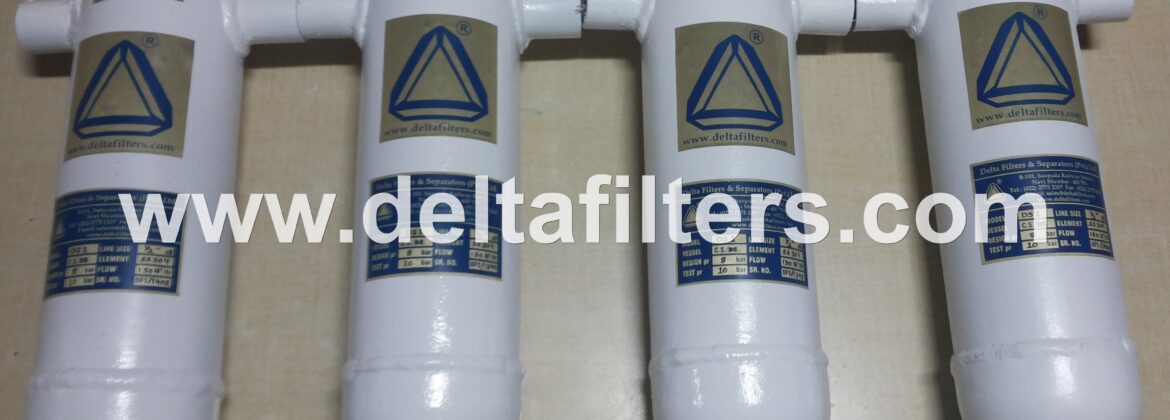
Moisture Separator for Air Compressors: Why Wet Compressed Air Is Costing You More Than You Think
Compressed air is often treated as a simple utility, much like electricity or water. It moves through the plant, powers tools and equipment, and rarely draws attention to what it actually contains. In reality, compressed air is seldom just air. It carries moisture, and that moisture has a direct and measurable impact on maintenance costs, equipment life, and product quality.
This is particularly relevant for facilities running pneumatic tools, painting or blasting lines, or instrumentation that depends on clean, dry air.
A moisture separator for an air compressor system is designed to remove this moisture at the source, and doing so can deliver meaningful cost savings over the operating life of your equipment.
Where Does the Moisture Come From?
Every compressor pulls in air from the atmosphere. That air always carries water vapor, even on a day that feels dry. Warm air holds more vapor. Cool air holds less. The point where air can hold no more vapor is called the dew point.
Here is the part most people miss. Compressing air does not remove water vapor. It squeezes the same vapor into a smaller space. Air compressed to 7 bar is packed about seven times tighter than normal air. So there is far more vapor in the line than the air can hold. The extra vapor turns into liquid water, right inside your pipework.
This happens in every compressed air system, in every climate. Humid regions see more of it. But even dry inland plants build up real amounts of water each day.
What Wet Compressed Air Really Costs You
Water inside a compressed air line does not sit still. It moves through the system and causes damage at many points.
- Corrosion: Rust flakes off inside the pipe and clogs small openings in tools and valves.
- Tool damage: Moisture washes away lubrication inside tools and cylinders, causing faster wear.
- Instrument faults: Water in instrument air lines can freeze in cold spots or block narrow tubing.
- Rejected paint and blasting work: Moisture causes poor adhesion and an uneven finish, leading to rework.
- Overloaded dryers: Raw, wet air forces dryers to work harder and use more energy.
- Downtime: Each of these problems leads to a repair, a stopped line, or a scrapped batch.
None of these costs show up as one clear line item. They spread across maintenance budgets, quality rejects, and energy bills. That is why they get missed for years.
How a Moisture Separator Solves This
A moisture separator fits directly into the compressed air line. It usually sits right after the aftercooler, or close to the point of use. This lets it remove water before it moves further into the system. The working principle is simple.
- Moisture-laden air enters the separator and passes through a dense coalescing element.
- This element forces small water droplets to merge into larger, heavier ones.
- Once heavy enough, gravity pulls the droplets down into a sump at the base of the unit.
- Dry air moves out through the outlet. The collected water drains off through a manual or automatic valve.
A well-built separator does this with a very low pressure drop. It removes moisture without making the compressor work harder. This is different from a dryer.
A separator removes bulk water using mechanical force. A dryer lowers water vapor further, down to a set dew point. A separator placed ahead of a dryer cuts its load, lowers its power use, and extends the life of its parts.
Where Moisture Separators Are Used
Moisture separators are common wherever air quality affects product quality, equipment life, or safety. Here are some industries where moisture separators are used:
- Manufacturing plants running pneumatic tools and assembly lines.
- Automotive and metal fabrication units with blasting and painting lines.
- Oil, gas, and petrochemical plants with instrument air systems.
- Pharmaceutical and food processing units where contamination control matters.
- Power plants and steel mills with large compressed air networks.
- Facilities installing air receivers or dryers that need protection from bulk moisture upstream.
How to Choose the Right Moisture Separator
Not every separator works the same way. The wrong choice can mean poor separation or extra pressure drop. Check these points before you buy to make an informed decision:
- Separation efficiency: Look for units rated close to 99 to 100 percent removal of free moisture.
- Pressure drop: A good separator adds very little resistance to the air line.
- Flow rate range: Match the unit to your actual line flow, in scfm or Nm3 per hour. Too small a cause causes carryover. Too large wastes money.
- Material: Carbon steel suits most jobs. Stainless steel, SS304 or SS316, suits higher corrosion resistance needs.
- Drain type: Manual drains suit small, closely watched systems. Automatic float-type drains suit continuous operation.
- Internal design: A coalescing element paired with a vortex containment system stops separated water from re-entering the air stream at higher speeds.
The parts inside matter most. The mist elimination media in a separator is often built using demister pad technology. This media sets how well the unit works as flow rates change.
It helps to buy from an established filtration maker, not a general fabricator. This matters more if you also buy gear for gas conditioning skids or knock-out drums.
Delta Filters and Separators Pvt Ltd: Your Partner for Moisture Separators and Demister Pads
Delta Filters and Separators Pvt Ltd has built filtration equipment since 1994. That is over 30 years in compressed air, oil and gas, and process applications. The firm is ISO certified. It makes its full range at its own plant in Khalapur, Maharashtra.
- Delta Filters is one of the established moisture separators for air compressor makers in India. Its track record is strong.
- Over 10,000 successful moisture separator installations across India and more than 25 countries.
- A coalescing element paired with a Vortex Containment Barrier system, rated to remove 99.95 percent of moisture from compressed air and gas streams.
- A model range covering flow rates from 30 scfm up to 50,000 scfm, with larger sizes built on request.
- Housing in carbon steel as standard, with SS304 and SS316 options, and working pressures up to 10 bar as standard, higher on request.
- Float-type automatic drains that run without any electrical supply, backed by feedback from over 3,000 installations.
- Over 250 units kept in ready stock to support urgent needs.
Other Services Provided by Delta Filters
Delta Filters also makes compressed air filters, air receivers, automatic drains, and demister pads. These go into compressed air, gas conditioning, and knock-out drum systems.
This makes the firm one of the known demister pad manufacturers in India. It supplies mist elimination media for compressed air units and for gas conditioning skids that use the same coalescing method.
Delta Filters has supplied equipment to customers in over 50 countries. Its projects have been checked by third-party agencies such as SGS, Bureau Veritas, TUV NORD, TUV SUD, DNV, ABS, and IRS. Its work spans oil and gas, steel, cement, pharma, and power plants.
Conclusion
Wet compressed air is a problem that rarely announces itself. It shows up as a higher tool replacement rate, a few more rejected paint jobs, or a dryer that needs service too often. On their own, these look like small issues. Added up over a year, they cost real money that could be avoided.
Fitting a properly sized moisture separator close to the point of use, or right after your after cooler, solves the problem at its source. It works with almost no added pressure drop and no real running cost. It pays for itself many times over.
If you are checking moisture separators or demister pad options for your compressed air system, contact Delta Filters and Separators Pvt Ltd at sales@deltafilters.com or +91 9930073977. Their team can suggest the right model for your flow rate and use case.